Full-Arch Implant Healing Timeline: What to Expect After Surgery
Full Arch Implant Education
Full Arch Dental Implant Healing Timeline: How Long Implants Really Take to Heal
This guide explains the full arch dental implant healing timeline and shows how long implants truly take to heal. Full arch dental implants heal over several months, even when temporary teeth are placed immediately after surgery. You may feel better early; however, the implants continue stabilizing during this time.
Full-Arch Implant Healing vs. Teeth in 24 Hours
You receive teeth quickly; however, healing takes longer. Although temporary teeth help you smile and function lightly, they do not indicate full healing. Because healing happens at a microscopic level, most issues occur when patients feel good too soon and return to normal chewing before the implants are ready.
Osseointegration in the Full Arch Dental Implant Healing Timeline
After surgery, your body begins forming a direct connection between bone and the implant surface. This natural process stays active for several weeks. It requires stability and gentle forces. The implant does not lock in immediately. Instead, bone gradually attaches to it and strengthens the connection over time.
This phase is a critical part of the full arch dental implant healing timeline.
Minimal Micromotion
Even small movements can interrupt the bone-implant connection.
Stable Environment
Good hygiene, inflammation control, and gentle function support healing.
Protected Function
Temporary teeth help you speak and smile, but they do not tolerate full chewing forces.
Full Arch Dental Implant Healing Timeline: Stages and What to Expect
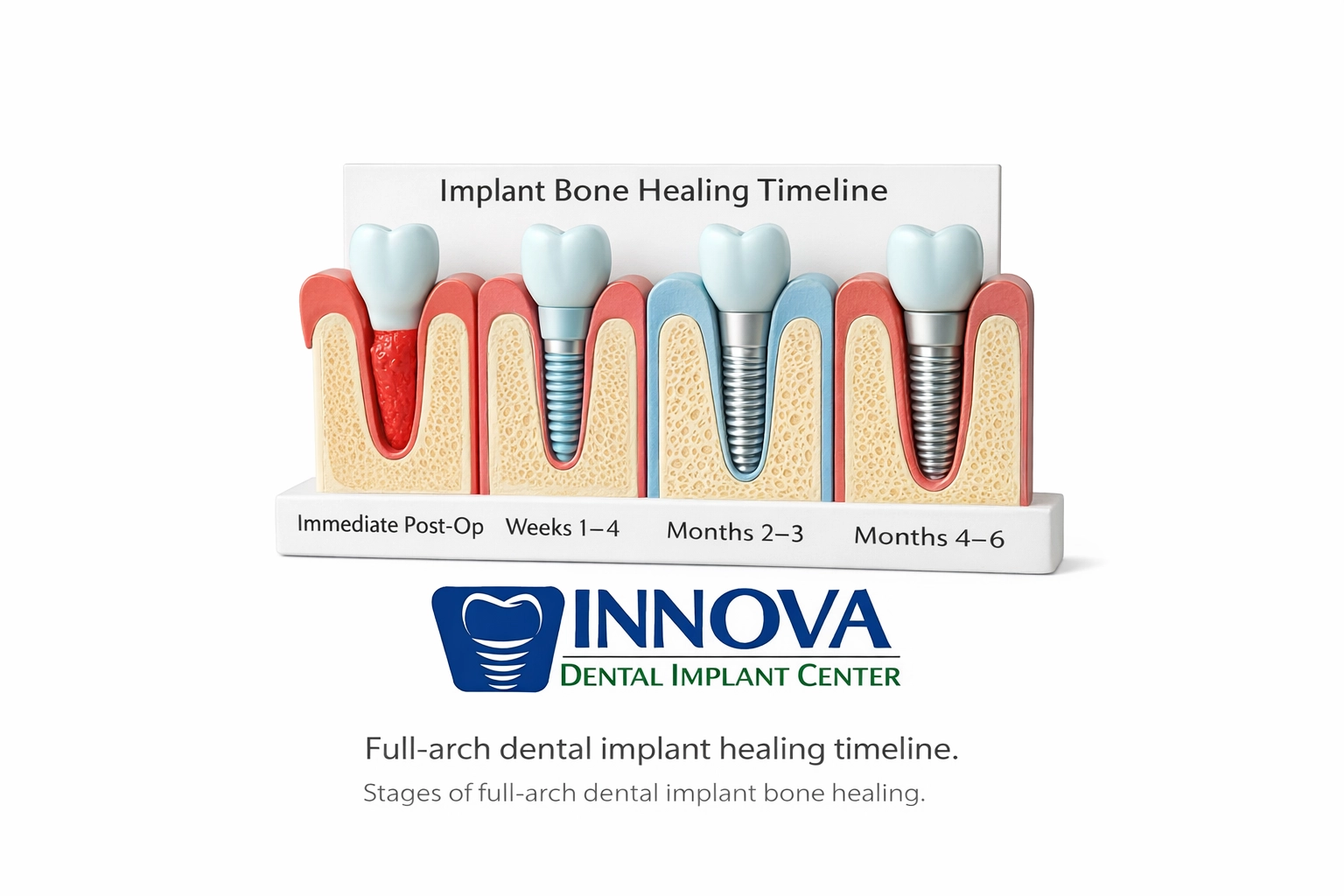
Healing follows predictable biologic phases. Each phase plays a specific role in long-term success.
Your body begins forming the foundation for integration.
- Blood clots form around the implants.
- Soft tissue starts to close.
- Swelling, tenderness, and bruising are common.
- Most patients feel better after a few days.
However, this phase remains the most delicate.
- Bone begins attaching to the implant surface.
- Initial stability decreases.
- Biological stability continues developing.
- This combination creates the “stability dip.”
At this stage, healing becomes more predictable.
- Bone remodeling increases.
- The implant-bone connection strengthens.
- You may feel more comfortable and confident.
- However, feeling better does not mean fully healed.
As a result, long-term function becomes possible.
- Bone becomes denser and more organized.
- Implants reach functional stability.
- The final teeth can often be delivered once healing is confirmed.
| Phase | Timeline | What is happening | What you may notice | Key message |
|---|---|---|---|---|
| Phase 1 | Days 1–14 | Clot formation, soft-tissue closure, and early inflammation. | Swelling, tenderness, bruising, and gradual improvement. | Protect the surgical site and follow a strict soft diet. |
| Phase 2 | Weeks 2–6 | Bone begins attaching while initial stability decreases. | Less pain and swelling; temporary teeth may feel stable. | This is the highest-risk phase. Avoid testing your teeth. |
| Phase 3 | Weeks 6–10 | Bone remodeling increases and stability improves. | More comfort and better day-to-day function. | Feeling better does not mean fully healed. |
| Phase 4 | 10–12+ Weeks | Bone matures and implants reach functional stability. | Healing feels more complete. | Long-term success develops during healing, not during surgery. |
On mobile, this table scrolls horizontally for easier reading.
How Temporary Teeth Fit Into the Full Arch Dental Implant Healing Timeline
Initially, temporary teeth look stable and feel reassuring. They help you smile, speak, and guide soft-tissue healing. However, they are not designed for full chewing forces. Even when they feel secure, the implants beneath them continue integrating.
Why Feeling Better Is Not a Sign of Healing
Pain does not reflect implant healing. Biology does. You may feel comfortable early; however, bone attachment continues long after symptoms fade. Therefore, increasing pressure too soon can disrupt healing.
What You Should Do
- Follow a strict soft diet.
- Wear your night guard consistently.
- Maintain excellent oral hygiene.
- Attend all follow-up visits.
What You Should Avoid
- Hard or crunchy foods such as nuts, steak, or raw vegetables.
- Biting directly into foods like apples or sandwiches.
- Skipping protective appliances.
- Testing your teeth prematurely.
How Healing Determines Long-Term Success
Importantly, healing influences long-term success more than the surgery itself. When implants are placed precisely and protected during integration, outcomes become predictable and stable.
Understanding the full arch dental implant healing timeline helps prevent early overload and complications.
Why This Phase Is Critical
In many cases, patients unintentionally disrupt healing because they feel better too soon. As a result, returning to normal chewing early can overload the implants. Understanding the biology behind healing helps protect your long-term results.
Why Treatment Philosophy Matters in Full-Arch Healing
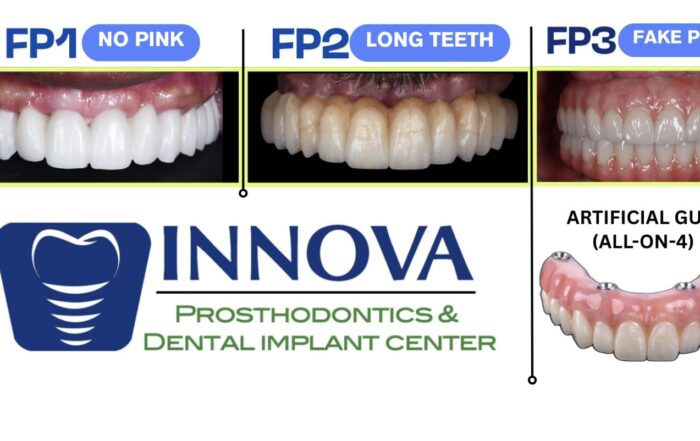
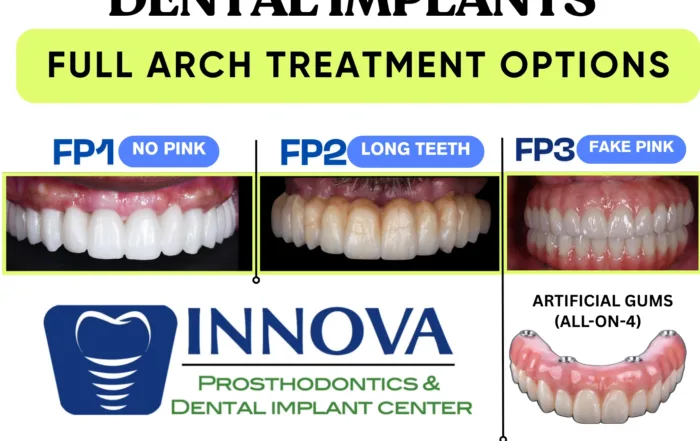
Not all full-arch treatments follow the same philosophy. Some approaches require significant bone reduction and rely on prosthetics that replace both teeth and gum tissue. Others preserve natural bone and design restorations that mimic natural teeth. This precision requires more control during planning and healing; however, it supports a more natural emergence profile and long-term preservation.
Frequently Asked Questions About the Full Arch Dental Implant Healing Timeline
How long does full-arch dental implant healing take?
Healing typically takes about 3 months as bone integrates with the implant surface.
Can dental implants fail during healing?
Yes. The highest-risk period occurs between weeks 2 and 6, especially if excessive force is applied.
Can I eat normally after full-arch implants?
No. A soft diet is required to protect the implants during healing.
Why do I have teeth right away if I am not healed?
Temporary teeth provide appearance and limited function. They do not indicate full integration.
What happens after healing is complete?
Once healing is confirmed, a final prosthesis—often zirconia—provides long-term strength and esthetics.
Schedule a Private, One‑on‑One Consultation
Speak directly with a board‑certified prosthodontist. No sales representatives. No pressure.
Book Your Consultation